
Tokyo's subway system is one of the most efficient in the world. It connects every major area of the city through its vast underground network.
If you're new to Tokyo, the Metro map might seem overwhelming at first. But once you learn how it works, you'll find it's one of the easiest ways to explore the city.
What Is the Tokyo Metro?
Tokyo Metro operates nine major subway lines across the city. It runs alongside another system called Toei Subway, operated separately.
Both are different from JR lines, which serve longer regional routes. Tokyo Metro mainly serves central Tokyo with frequent and fast service.
Overview of the Metro Map
The Tokyo Metro map is organized by color-coded lines and station codes. Each station has a letter and number combination, making it easy to follow.
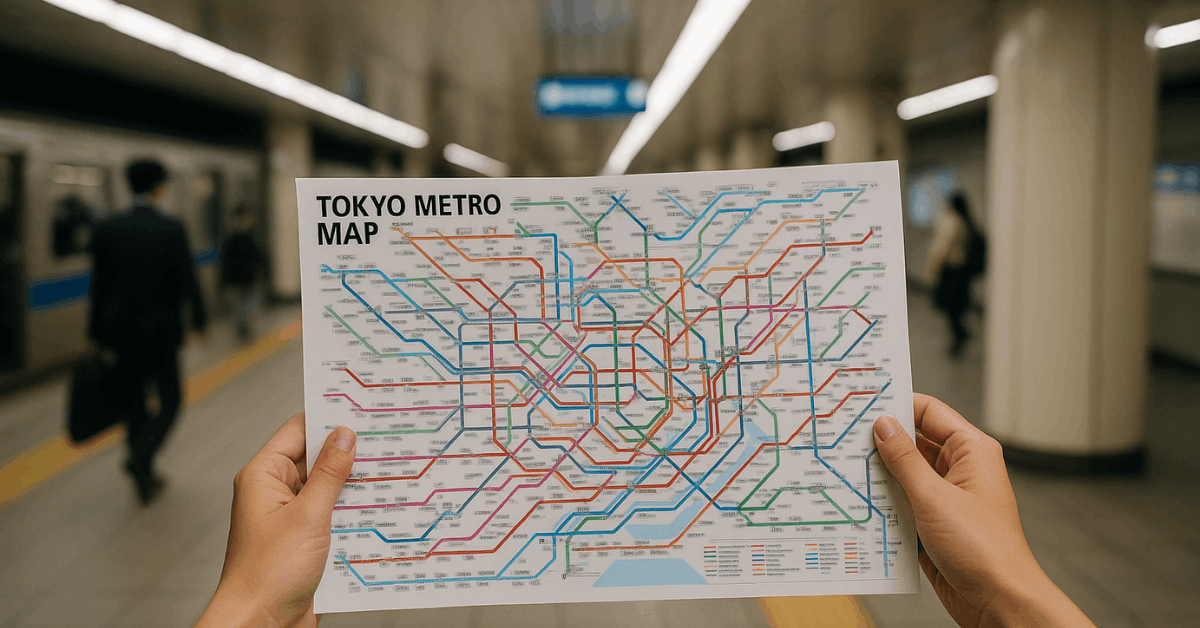
Major transfer hubs connect multiple lines at once. The map also includes icons for exits, restrooms, and accessibility features.
The 9 Tokyo Metro Lines
Each Metro line is identified by a letter and color, helping you trace your path clearly.
These lines cover both business districts and tourist destinations across the city. Here's a quick breakdown:
Ginza Line (G)
The Ginza Line is Tokyo's oldest subway line, connecting Asakusa, Ginza, and Shibuya.
It offers quick access to both traditional and commercial areas. This line is a top choice for tourists exploring the city.
Marunouchi Line (M)
The Marunouchi Line links major business hubs like Tokyo Station and Shinjuku. Its loop-like route passes through important financial and commercial centers. It's widely used by daily commuters.
Hibiya Line (H)
The Hibiya Line travels through entertainment and tech districts such as Roppongi and Akihabara.
It's a convenient route for those visiting shopping areas and cultural spots. It also connects with several major transfer points.
Tozai Line (T)
The Tozai Line runs from Nakano in the west to Chiba in the east. It serves residential and university areas like Waseda. This line offers a smooth ride through central Tokyo.
Chiyoda Line (C)
The Chiyoda Line connects outer residential districts with inner-city locations. It stops at key areas like Meiji-Jingumae and Omotesando. It balances daily commuting with access to fashionable neighborhoods.
Yurakucho Line (Y)
The Yurakucho Line links Ikebukuro, Ginza-itchome, and Shin-Kiba. It's useful for travelers heading to the Tokyo Bay area. The line is also close to several shopping and event venues.
Hanzomon Line (Z)
The Hanzomon Line serves Shibuya, Otemachi, and the Tokyo Skytree district. It's commonly used by both tourists and office workers. It runs parallel to the Ginza Line in some central areas.
Namboku Line (N)
The Namboku Line stretches from Meguro to Akabane-Iwabuchi. It passes through quieter areas and connects many university campuses. The line offers a relaxed commute through less busy zones.
Fukutoshin Line (F)
The Fukutoshin Line joins Shibuya, Shinjuku, and Ikebukuro in a straight, efficient route.
It serves key commercial and nightlife areas. This line also features express services during rush hours.
How to Read the Map Efficiently?
Learning to read the map saves you time and stress. Each station has signs in English, Japanese, and often Korean or Chinese.
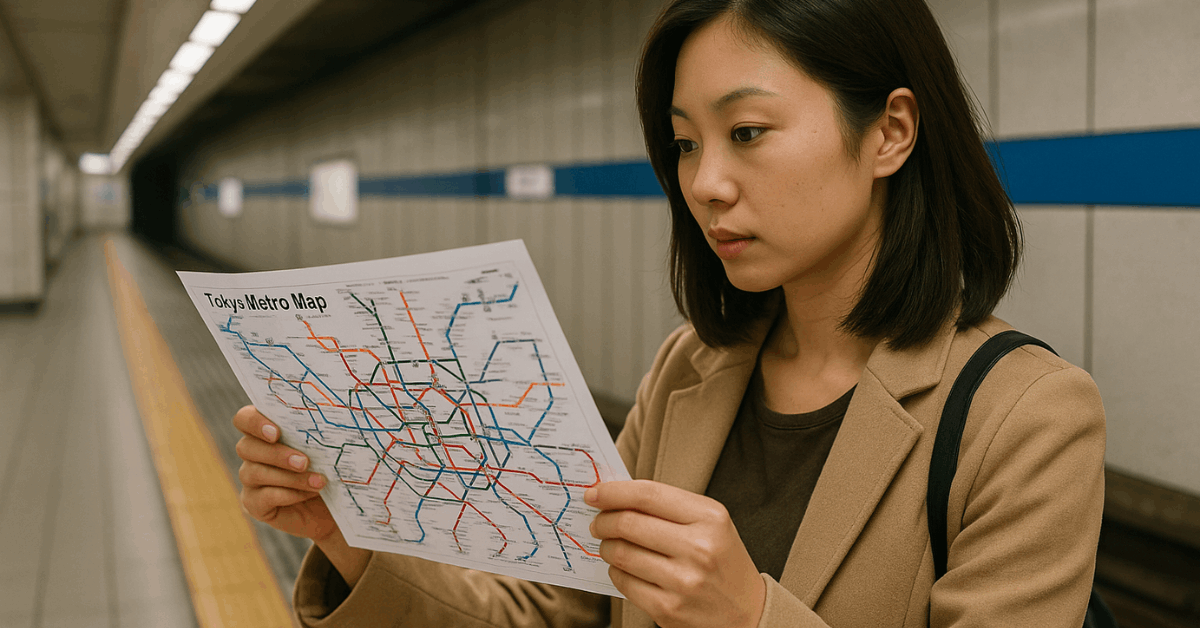
Directional arrows show you where to transfer and which platform to use. Use apps like Navitime or Google Maps to preview your route and find transfer points.
Must-Know Interchange Stations
Some stations make it easier to travel across lines. They let you switch from one subway to another without exiting the system. Here are the top four:
Shinjuku Station
Shinjuku Station is one of the busiest transportation hubs in the world. It connects Tokyo Metro, JR lines, and private railways efficiently. The station also includes many shopping and dining facilities inside the complex.
Tokyo Station
Tokyo Station links the Marunouchi Line with JR lines, including bullet trains. It serves as a key transfer point for long-distance and local travel. The station is also known for its historic red-brick exterior.
Ikebukuro Station
Ikebukuro Station connects three Tokyo Metro lines and several JR services. It is located in a commercial area filled with department stores and entertainment venues. This makes it both a transfer point and a shopping destination.
Shibuya Station
Shibuya Station links the Ginza, Hanzomon, and Fukutoshin lines, plus JR and private railways.
It is a major crossing point for tourists and locals. The area is famous for the Shibuya Scramble Crossing and trendy shops.
Tickets and IC Cards
You can choose between paper tickets and IC cards. IC cards like PASMO or Suica are rechargeable and can be used on all public transport.
They're more convenient for frequent travel. Machines and kiosks offer English support when buying or recharging.
Using the Metro as a Tourist
The Metro helps tourists visit key places in Tokyo without needing a taxi. Most attractions are near Metro stations.
You can reach temples, parks, and shopping districts easily. Even without speaking Japanese, signs and announcements help you navigate.
Metro Tips for First-Time Users
Follow local rules for a smooth ride. Always queue at designated spots before boarding.
Check the direction of the train before getting on. Rush hours are usually 7-9 AM and 5-7 PM, so avoid those if possible.
Accessibility and Facilities
Tokyo Metro offers great accessibility for all passengers. Many stations include elevators, tactile paths, and barrier-free entrances.
There are also women-only cars during morning rush hours. Restrooms and baby-changing facilities are marked on the map.
Safety and Etiquette in the Metro
Respecting etiquette is key when using Tokyo Metro. Keep phones on silent and avoid talking loudly. Offer seats to the elderly or people with disabilities.
If you lose something, go to the station office or use the Metro's online lost-and-found system.
Night Trains and Last Train Times
Each line has a last train that departs between 11:30 PM and 12:30 AM. Always check the timing before your trip.
If you miss the last train, taxis and capsule hotels are common alternatives. Apps can also show the time of the final trains from your station.
Apps and Tools to Navigate Tokyo Metro
Using apps makes your Metro journey easier. They help with planning routes, finding exits, and checking schedules. Here are some tools to use:
Tokyo Subway Navigation
Tokyo Subway Navigation is the official app provided by Tokyo Metro. It shows station details, route options, and platform information.
It's available in multiple languages, easy to use for tourists, and can be downloaded from the App Store and Google Play.
Japan Travel by Navitime
Japan Travel by Navitime offers offline access to maps and route planning. It includes tourist-friendly features such as spot searches and estimated fares.
This app is especially helpful if you don’t have mobile internet. It is available for Android and iOS users.
Google Maps
Google Maps supports route planning for Tokyo Metro and other networks. It provides live updates on train status and delays.
You can also see walking directions for exits and transfers. You can download it from the Google Play and the App Store.
Metro Passes and Budget Travel Options
Passes save money if you travel a lot in a short period. Options include:
Tokyo Subway Ticket
Available in 24, 48, or 72-hour versions. Lets you ride unlimited times on Metro and Toei lines.
Combination Passes
These include Metro, Toei, and other regional trains. Good for broader access beyond Tokyo.
Differences Between Tokyo Metro and Toei Subway
Tokyo has two separate subway systems: Tokyo Metro and Toei Subway. Although maps are integrated, they are managed by different companies.
Some tickets or passes are not valid on both systems. Always check line labels to know which operator you're using.
Using the Metro for Daily Commuting
Commuters use monthly passes to reduce costs. You can select specific routes and pay a fixed fee.
Employers often cover commuting costs. Most stations have lockers, shops, and cafes to support daily routines.
Comparing Tokyo Metro with Other Global Cities
Tokyo Metro is known for punctuality, cleanliness, and safety. Compared to New York or London, it has clearer signage and better service.
Trains arrive every few minutes, even during off-peak hours. It's widely regarded as one of the most user-friendly systems in the world.
Final Thoughts: Navigate with Confidence
The Tokyo Metro Map is more than just a travel tool—it's your gateway to discovering the city.
Whether you're sightseeing, commuting, or just exploring, it helps you move quickly and comfortably.
With clear signs, helpful apps, and tourist-friendly services, you can master it easily. Start your journey today and enjoy what Tokyo has to offer.